
Muralist - Sculpture - Fine Arts
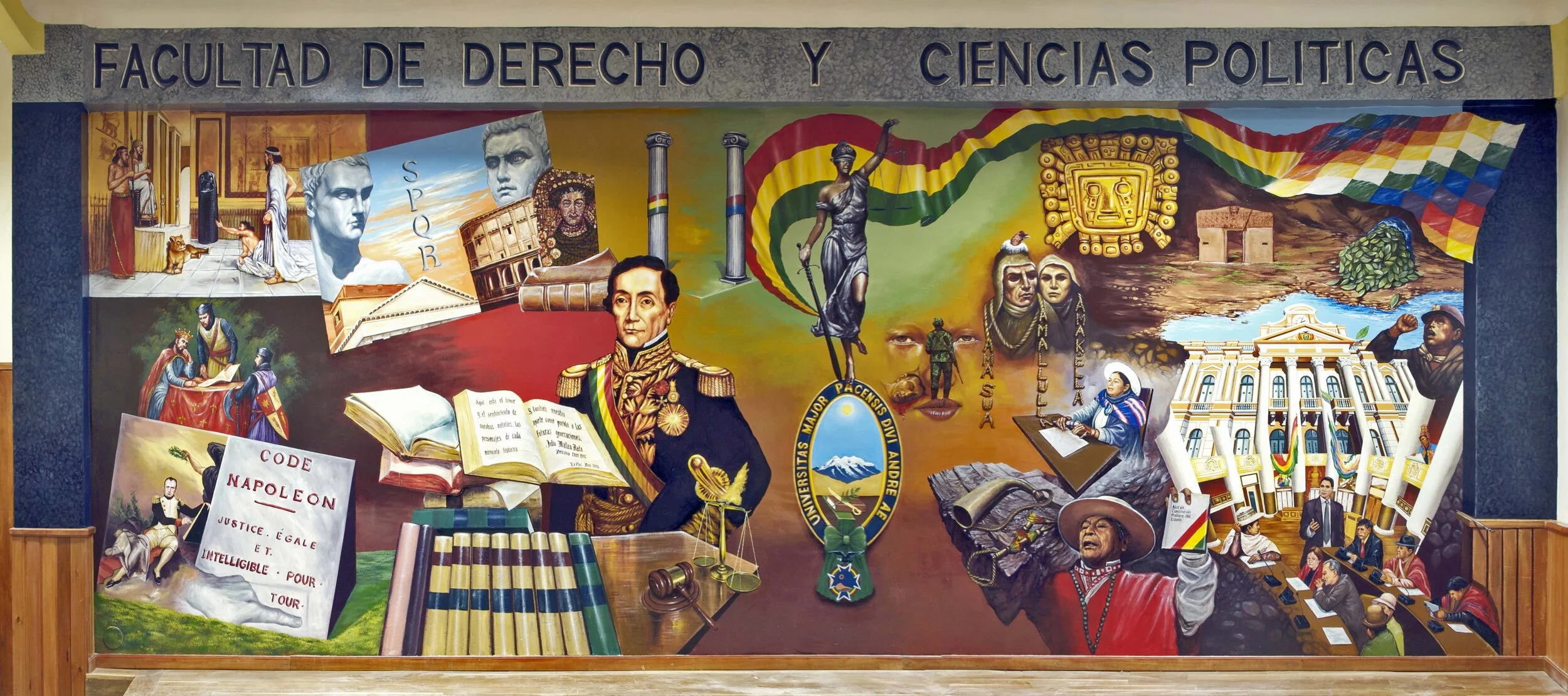
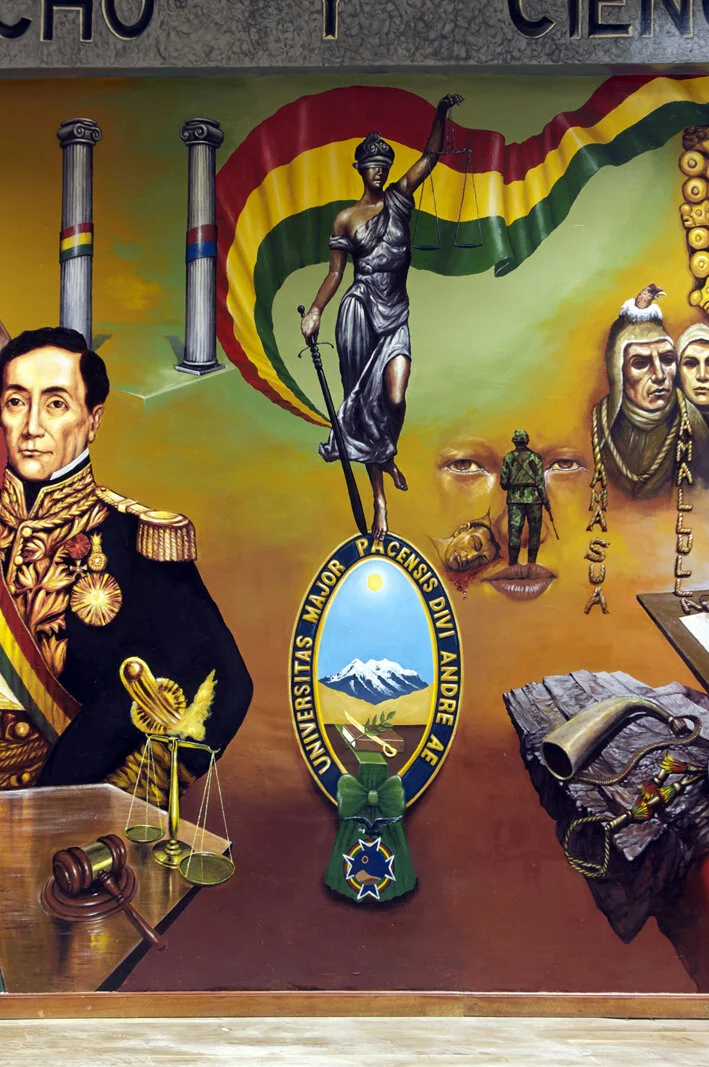
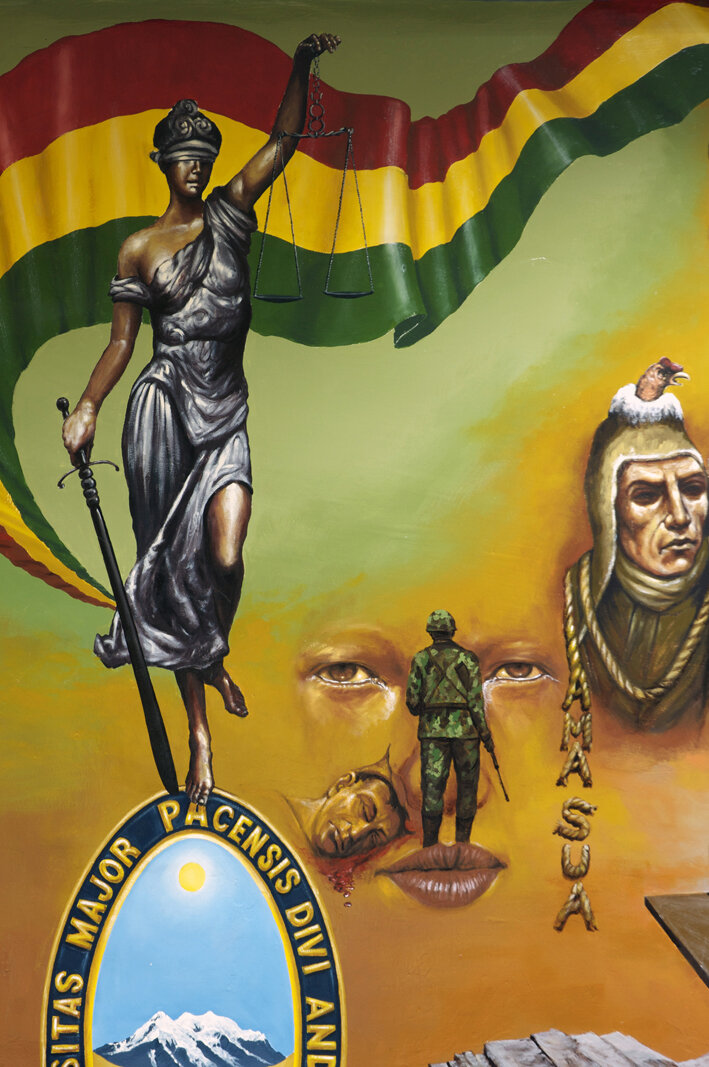
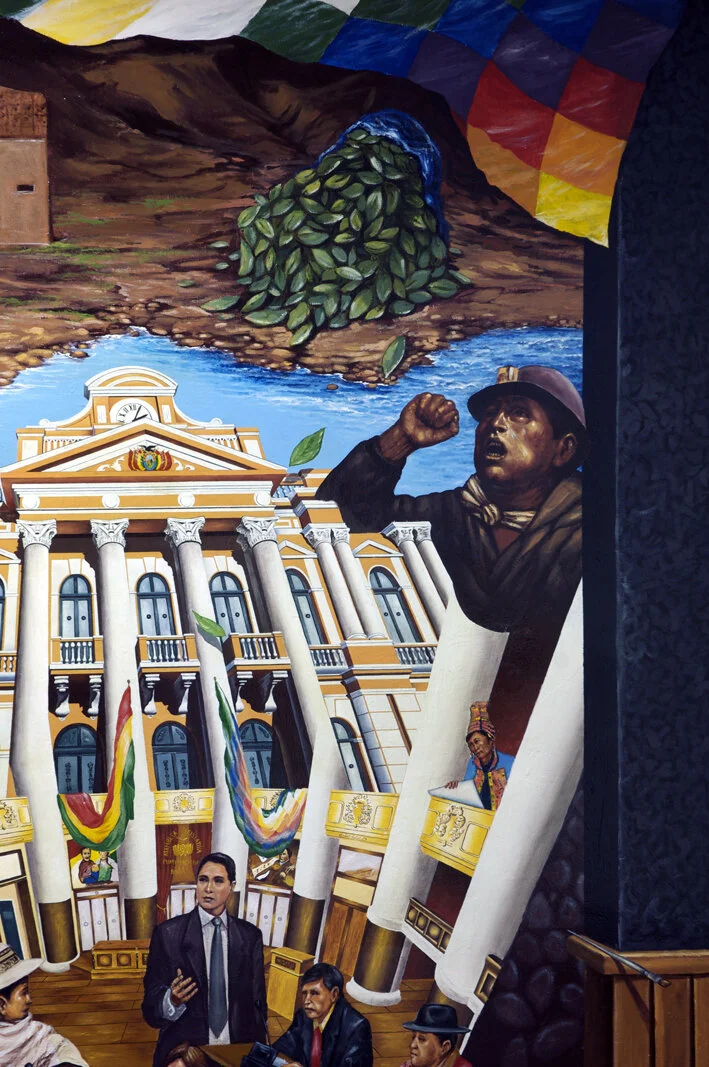
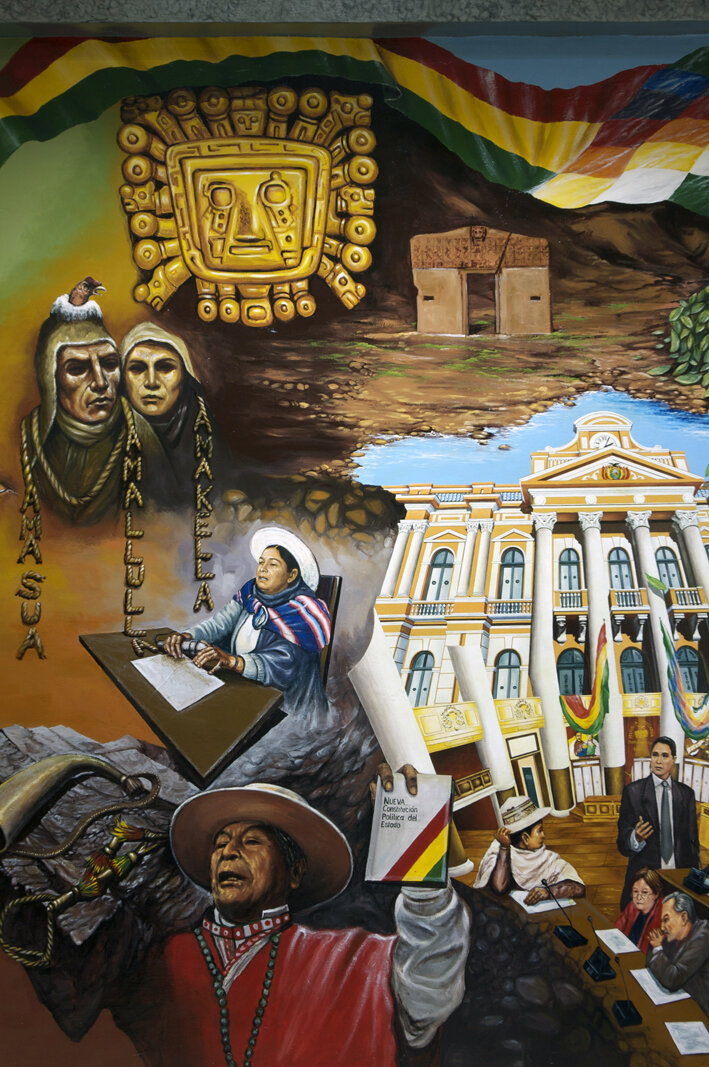
Descolonización de la Justicia Boliviana
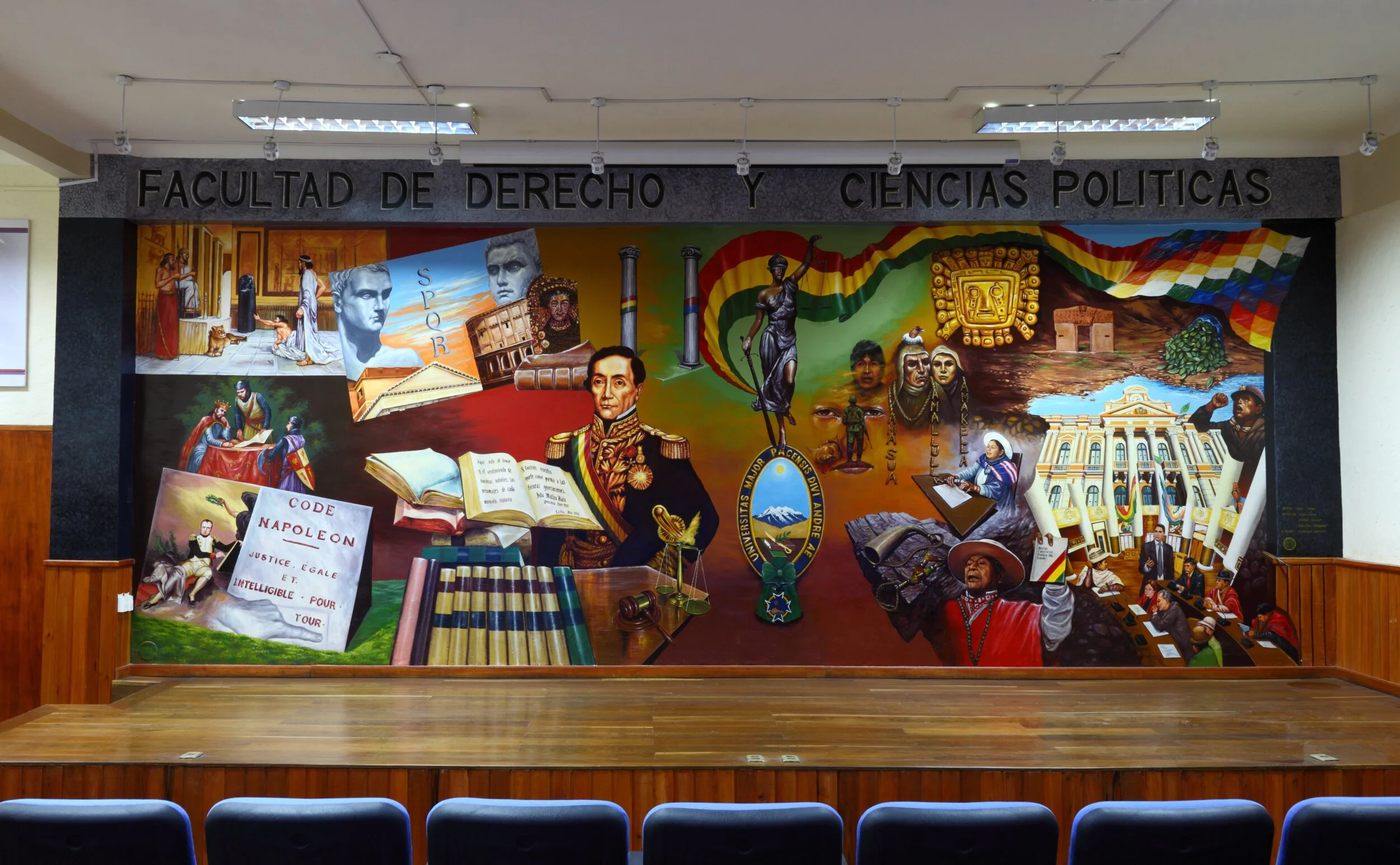
La Paz, Bolivia – Main Auditorium, U.M.S.A. / 9’2” x 27’3” / Acrylic and Oil on Cement / 2010
This monumental mural, stretching across the heart of the Universidad Mayor de San Andrés in La Paz, offers a compelling visual meditation on Bolivia’s ongoing struggle to reconcile two legal legacies: the imposed structures of Western law and the ancestral frameworks of Indigenous justice.
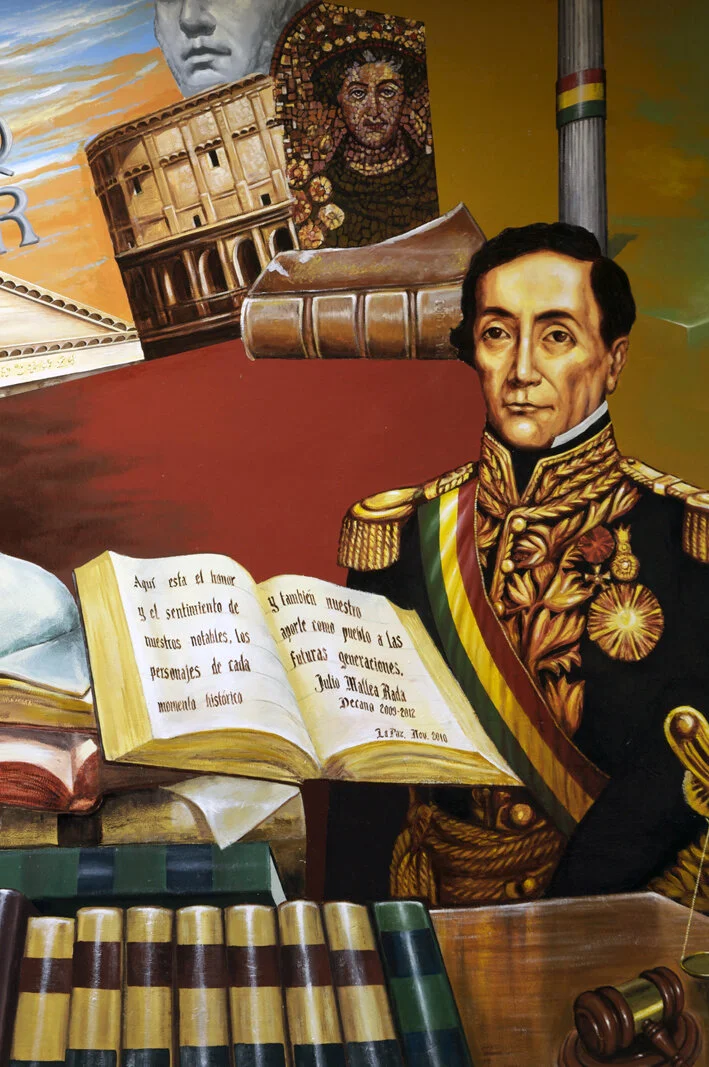
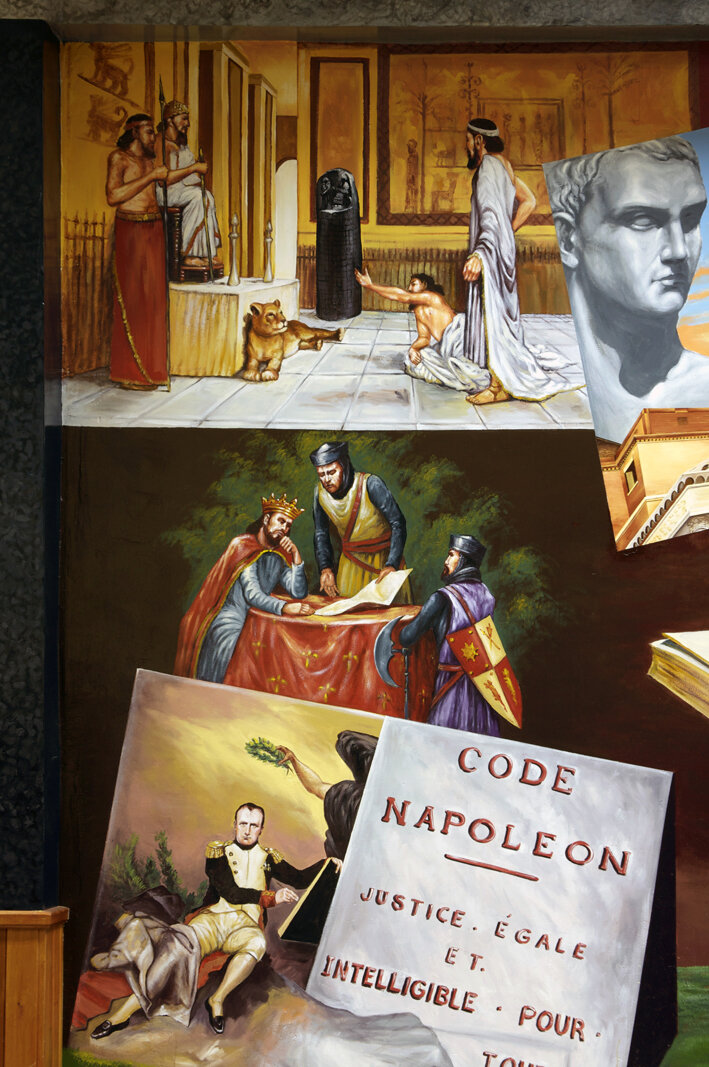
Painted in luminous layers of acrylic and oil on cement, the mural stages a dramatic interplay between systems rooted in vastly different worldviews. On one side, Western legal tradition is depicted through iconic historical references—stone tablets recalling the ancient Code of Hammurabi, the scales and statutes of Roman law, and the formal rigidity of the Napoleonic Code, which profoundly shaped much of Latin America’s contemporary legal framework. These legal systems, codified, centralized, and hierarchical, are shown towering above individuals, evoking control from above.
In stark contrast, the Indigenous legal worldview unfolds organically across the composition. Here, justice is not written in stone or administered from lofty courts, but lived daily through customary practice, oral tradition, community assemblies, and spiritual stewardship of the land. Elders, mountains, animals, and sacred symbols radiate from the earth, suggesting a legal system rooted in reciprocity, balance, and the wisdom of generations. It is a justice felt in the body, the soil, the stars.
At the center of the mural, these two traditions clash, overlap, and attempt to coexist. A symbolic "marriage" is portrayed—not one of seamless union, but of tension and contradiction. Tangled threads, broken chains, and overlapping scripts depict the layered complexity of a nation still healing from colonial imposition. Yet within this friction, the mural also holds space for hope—a reimagining of justice that honors Indigenous sovereignty while exposing the inherited inequities of the Western model.
The work invites reflection not only on Bolivian identity, but on the universal question of how justice is defined, by whom, and in whose language. In a country where Indigenous people make up the majority, but have long been marginalized by imported legal doctrines, this mural becomes a vibrant call to decolonize law—at the level of policy, but also in spirit and practice.
In a single sweeping composition, Descolonización de la Justicia Boliviana offers both a mirror and a vision: a reminder of the past’s heavy hand, and a glimpse into a more just, rooted future.